
Wondering which sweepstakes are legitimate? Real sweepstakes give away cars, trips, cash and gift cards every day. Fake ones steal personal information, money and passwords. The difference usually comes down to a handful of checks you can do in a couple of minutes.
Table of Contents
Which sweepstakes are legitimate? What to look for
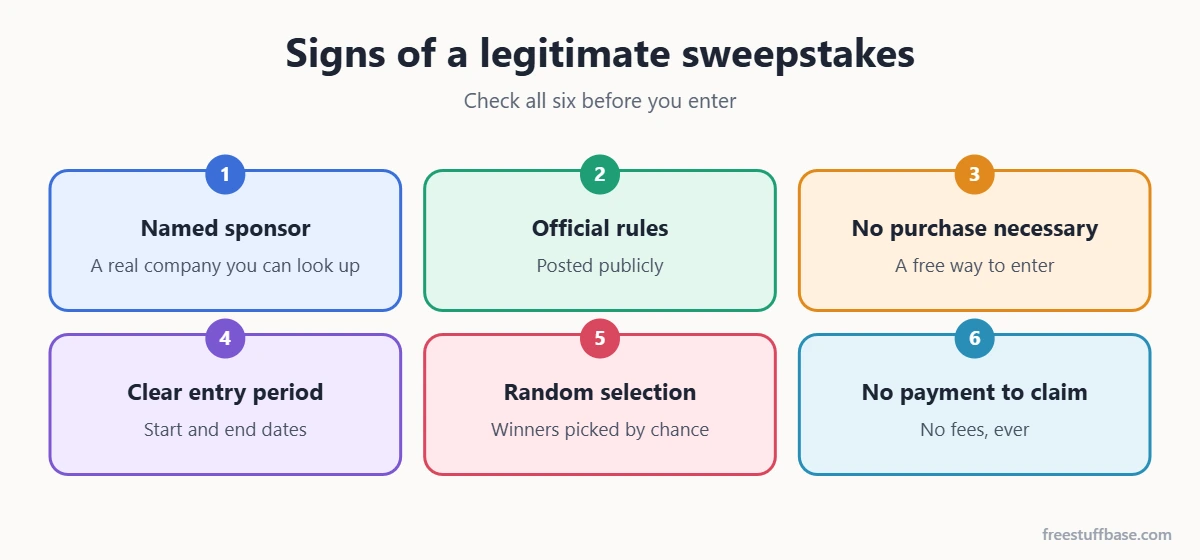
A legitimate sweepstakes in the U.S. generally has:
- A named sponsor – a real company you can look up, listed clearly in the rules.
- Official rules – posted publicly, covering eligibility, entry period, how to enter, prizes and their value, odds and how winners are chosen and notified.
- No purchase necessary – there must be a free way to enter, and buying something can’t improve your odds. The FTC notes it’s illegal to require payment to enter or to claim that a purchase increases your chances.
- A fixed entry period with a clear start and end date.
- Random selection – winners are picked by chance (contests that judge skill are different and may charge entry fees).
- No payment to claim a prize – no fees, “taxes”, shipping costs or customs charges paid to the sponsor or a third party.
10 quick checks to see which sweepstakes are legitimate
- Is the giveaway on the brand’s official website or verified social account?
- Can you find and read the official rules?
- Does the sponsor give a real company name and address?
- Is there a free way to enter?
- Are the prize and its approximate value clearly stated?
- Does it collect only what’s needed (name, email, sometimes address and phone)?
- Is the entry period clear?
- Does the URL look right, with no odd spellings or extra words?
- Have other people reported it as a scam? Search the sweepstakes name plus “scam”.
- Does it feel rushed? Legitimate promotions don’t pressure you to act in minutes.
Red flags of a fake sweepstakes
- You “won” something you never entered.
- You must pay to collect your prize. The FTC’s long-standing advice: if you have to pay for your “prize”, it’s not a prize.
- You’re asked for bank, credit card or Social Security details to “verify” a win.
- Payment requests by gift card, wire transfer or crypto.
- Calls from area codes outside the U.S. claiming you’ve won, or messages from personal email addresses.
- “Share this post to win” pages run by look-alike accounts with few followers.
Where to find legitimate sweepstakes
The easiest way to know which sweepstakes are legitimate is to find them through trusted sources:
- Official websites and verified social accounts of major brands
- Product packaging and in-store promotions (with a free entry method listed in the rules)
- Established sweepstakes directories that link to the sponsor’s official rules page
What to do if you’ve been targeted
- Don’t pay, don’t share financial details and don’t call back numbers from the message.
- Report fake prize offers to the FTC at ReportFraud.ftc.gov and forward scam texts to 7726.
- If you’ve sent money, contact your bank or the payment provider immediately.
How to verify a sponsor in five minutes
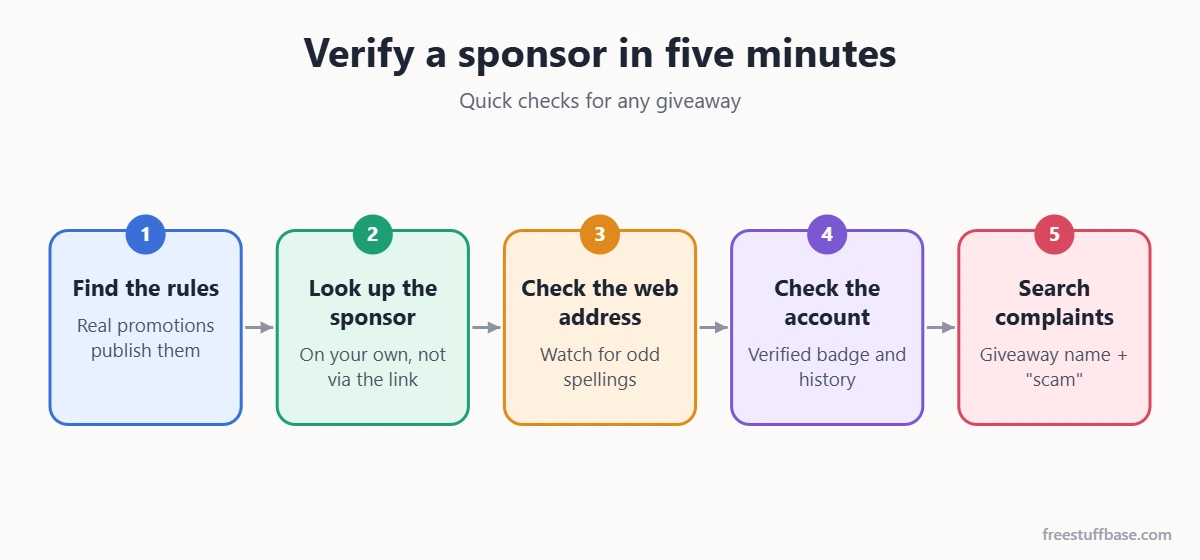
- Find the official rules. A real sweepstakes has a full rules page that names the sponsor, lists eligibility, entry dates, prizes and their approximate value, and explains how winners are chosen.
- Look up the sponsor yourself. Search for the company’s official website and check whether the giveaway is mentioned there or on its verified social accounts.
- Check the web address. Scam pages often use slightly misspelled brand names or long, odd domains. The entry page should be on the brand’s domain or a well-known promotion platform named in the rules.
- Check the social account. Look for a verification badge, the account’s age, its follower count and its regular posts. A brand-new account running a huge giveaway is a warning sign.
- Search for complaints. Search the giveaway name with words like “scam” or “fake” to see if others have reported it.
Common sweepstakes scams to know
These scams show why it pays to check which sweepstakes are legitimate before you enter:
- Fake “you’ve won” calls and letters. The caller says you won a large cash prize or a car but must pay taxes, fees or shipping first. Real sponsors don’t collect money from winners. Taxes are reported to the IRS, not paid to the sponsor upfront.
- Impersonated famous giveaways. Scammers often pretend to be from well-known sweepstakes companies. Publishers Clearing House, for example, has long warned that it never asks winners to pay. See our article on the PCH “$5,000 a week for life” prize.
- Cloned social media giveaways. A fake account copies a brand’s real giveaway and messages people who commented, saying they’ve won and asking for card details or a “verification fee”.
- Foreign lottery offers. Messages saying you won a lottery in another country, often one you never entered, are scams. Playing foreign lotteries by mail or phone is also illegal under U.S. law.
- Fake checks. You get a check for part of your “winnings” and are told to deposit it and send back money for fees. The check later bounces, and you lose the money you sent.
What legitimate winner paperwork looks like
For valuable prizes, real sponsors usually send an affidavit of eligibility, a liability and publicity release, and a tax form such as a W-9 so they can report the prize value to the IRS. They don’t ask for bank logins, card numbers or payments. If you’re unsure, contact the sponsor through the address in the official rules or on its website, never through a phone number or link in the “winner” message. The IRS explains how prizes are taxed in Publication 525.
State rules that protect entrants
Some states add extra protection for big promotions. New York and Florida, for example, require sponsors of games of chance with total prizes over $5,000 to register and post a bond with the state. This is one reason many large national sweepstakes have detailed rules and clear sponsor information: legitimate companies follow these requirements, while scammers don’t.
Legit vs. fake: a quick comparison
| Legitimate sweepstakes | Fake sweepstakes |
|---|---|
| Free to enter, with a “no purchase necessary” option | Asks for a fee, a purchase or “processing” money |
| Full official rules with sponsor name and address | No rules, or vague rules with no sponsor named |
| You entered it yourself | You “won” something you never entered |
| Winner contacted by the method in the rules | Contacted by random texts, DMs or calls |
| Asks for tax forms only after a big win | Asks for bank logins, card numbers or gift cards |
| Gives you reasonable time to respond | Pressures you to act within minutes |
When you are deciding which sweepstakes are legitimate, use this table as a final check. If a giveaway fails even one of these checks, don’t enter, and never share personal or payment details. When in doubt, it’s always safer to skip a giveaway than to risk your money or identity.
Examples of well-known legitimate sweepstakes
Competing articles often explain warning signs without showing what real promotions look like. These are examples of long-running sweepstakes run by established companies. They are useful benchmarks when you are deciding which sweepstakes are legitimate.
| Promotion type | Example | Why it is considered legitimate |
|---|---|---|
| TV network giveaways | HGTV Dream Home and other network sweepstakes | Run every year by a major media company with detailed official rules and public winner announcements |
| Direct-mail sweepstakes | Publishers Clearing House | A long-running company that publishes rules and says it never charges winners a fee |
| Brand promotions | Food, drink and consumer brands running seasonal giveaways | Sponsors are named, rules are posted and free entry is offered |
| Local radio and TV | Station call-in or online contests | Tied to a licensed broadcaster you can contact directly |
Even with well-known names, scammers often impersonate the brand. Always go to the sponsor’s real website yourself instead of following a link in a message.
How to read an official rules page
The official rules are the single best tool for deciding which sweepstakes are legitimate. They can look long, but you only need to check a handful of sections.
| Section | What to look for |
|---|---|
| Sponsor | A real company name and mailing address |
| Eligibility | Age, country or state limits that you meet |
| Entry period | Clear start and end dates and times, including the time zone |
| How to enter | At least one free entry method |
| Prizes and ARV | A description of each prize and its approximate retail value |
| Odds | Usually stated as depending on the number of eligible entries |
| Winner selection | How and when winners are picked, and by whom |
| Privacy | How your information will be used, often linked to the sponsor’s privacy policy |
If a giveaway has no rules page at all, or the rules are missing several of these sections, treat it with suspicion.
Scams that pretend to be sweepstakes
Foreign lottery and prize call scams
A caller says you have won a foreign lottery or a big sweepstakes prize, but you must pay taxes, insurance or fees first. Real prizes never work this way. The FTC warns that it is illegal for anyone to ask you to pay to collect a prize, and entering foreign lotteries by phone or mail is generally against U.S. law anyway.
Fake check and overpayment scams
You receive a check for part of your “winnings” and are told to deposit it and send some money back for fees. The check later bounces, and you lose the money you sent. A legitimate sponsor will not send you a check and ask you to return part of it.
Comment reply impersonators
You comment on a real brand’s giveaway, and soon a look-alike account replies saying you won and asking you to message them or click a link. Check the account name carefully. Real brands announce winners from their official, verified account and follow the process in their rules.
Quick technical checks for a giveaway website
- Check the web address: look for misspellings or extra words added to a brand name.
- Look up the domain age: a free WHOIS lookup shows when a site was created. A “big brand” giveaway on a site made last week is a red flag.
- Reverse image search the prize photo: scammers often use stock images or pictures stolen from other promotions.
- Search the promotion name plus “scam”: other people may already have reported it.
- Check for a privacy policy and contact page: legitimate sponsors explain how to reach them and how your data is used.
What legitimate sweepstakes do with your information
Real sponsors collect your name and contact details so they can run the promotion and reach winners. Many also add entrants to their marketing lists, which should be explained in the rules or privacy policy. That is normal. What is not normal is a request for your bank account, card number, Social Security number before you have even won, or passwords. Knowing that difference is one of the simplest ways to judge which sweepstakes are legitimate.
FAQ
Do I have to pay taxes on sweepstakes winnings?
Prizes are generally taxable income in the U.S., and big prizes are reported to the IRS. Taxes are paid to the government, not to the sponsor before you receive the prize.
Are “comment to win” giveaways on social media legit?
Some are, if run by the brand’s verified account with posted rules. Many are fake accounts copying real brands.
Can a legit sweepstakes ask for my phone number?
Yes, many do so they can contact winners. They shouldn’t ask for bank details or payment.
Is a giveaway on Instagram or Facebook legit?
It can be, if it comes from the brand’s verified account and links to official rules. Be wary of copycat accounts with similar names, and never pay or share card details to “claim” a social media prize.
Where can I report a sweepstakes scam?
Report it to the FTC at ReportFraud.ftc.gov. If the scam came by mail, you can also report it to the U.S. Postal Inspection Service, and you can report fake social accounts directly to the platform.
How can I quickly tell which sweepstakes are legitimate?
Look for official rules, a real sponsor you can find on your own and a free way to enter. If any of these is missing, or you’re asked to pay to claim a prize, walk away.
Which sweepstakes are legitimate on Instagram?
Look for giveaways posted by verified brand accounts, with a link to official rules, a clear end date and no request for payment. Be wary of accounts that message you first claiming you won.
Is it a scam if a sweepstakes asks for my date of birth?
Not necessarily. Many sponsors check that entrants meet the age limit. It becomes a red flag when they also ask for financial details, passwords or payment.
Final thoughts
Knowing which sweepstakes are legitimate comes down to a few checks: official rules, a real sponsor, a free way to enter and no payment to claim a prize. Take five minutes to verify a giveaway before you share your details, and report anything suspicious. The FTC’s guide to fake prize, sweepstakes and lottery scams is worth a read. Ready to enter? See how to enter sweepstakes, how to win sweepstakes and do sweepstakes really work.

Md. Emam Hasan is the founder of Freestuffbase and a digital marketer and SEO specialist based in Dhaka, Bangladesh. He researches free samples, gift card policies and sweepstakes rules from official sources, and writes practical guides to help readers save money and avoid scams. More at emamit.com.