

Quick answer: The best free things at your library go far beyond printed books. With a free library card you can usually borrow ebooks, audiobooks and magazines through Libby, stream movies, take online courses, borrow museum or park passes, check out tools and gadgets from a Library of Things, borrow Wi-Fi hotspots, use computers and printers, and get help with taxes, job searches and English classes. Offers vary by library, so check yours.
How we put this together: we compared popular library-perk roundups with library and agency sources, including OverDrive’s Libby help pages, the IRS, LinkedIn, Denver Public Library and EBSCO’s Library of Things survey, and we link our sources. Every library is different, so check your own library’s website for what it offers.
A library card is free for local residents, and it might be the most valuable free thing you can own. Libraries have changed a lot. Many now work like community centers, lending everything from laptops to cake pans and running classes for all ages. This guide covers the most useful free things at your library and how to find out what yours offers.
Table of Contents
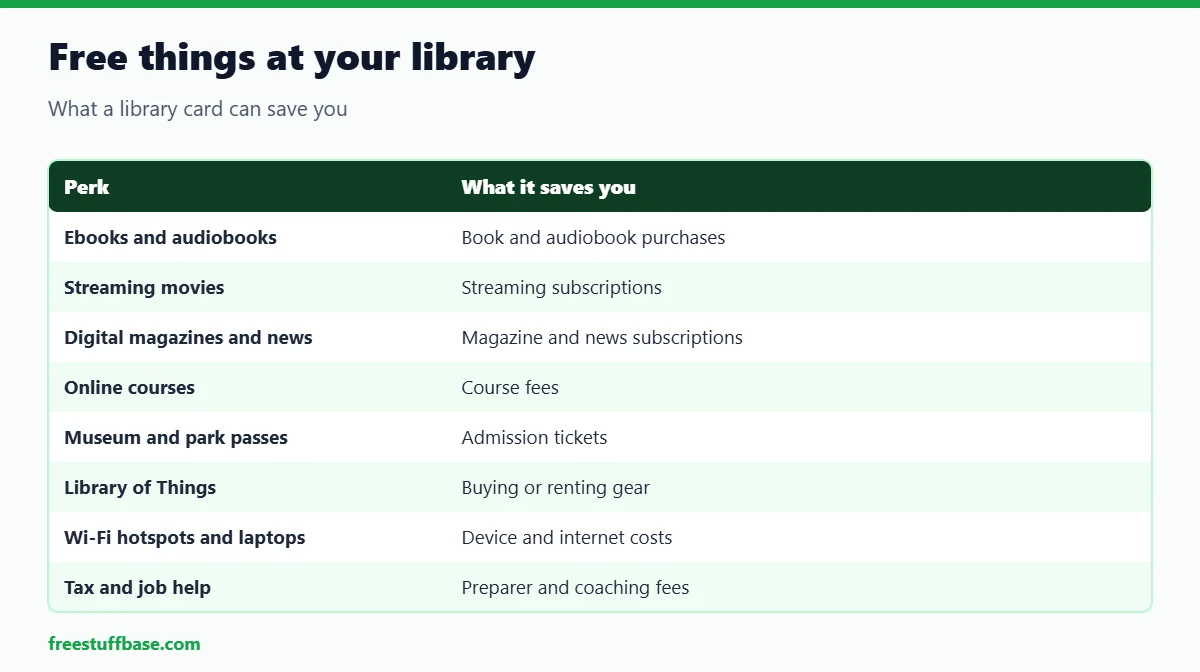
Free things at your library at a glance
| Perk | What it saves you | How common |
|---|---|---|
| Ebooks and audiobooks | Book and audiobook purchases | Very common |
| Streaming movies | Streaming subscriptions | Common |
| Digital magazines and news | Magazine and news subscriptions | Common |
| Online courses | Course fees | Common |
| Museum and park passes | Admission tickets | Varies |
| Library of Things | Buying or renting gear | Growing |
| Wi-Fi hotspots and laptops | Device and internet costs | Varies |
| Tax and job help | Preparer and coaching fees | Seasonal or varies |
1. Free ebooks, audiobooks and magazines
This is the perk most people know about but few use fully. Libby’s help page says the app is completely free to install, and all the digital content from your library is free to borrow with a valid library card. You can stream with Wi-Fi or mobile data or download titles to read offline, and in the US you can send many ebooks to a Kindle.
Popular titles have waiting lists, so place holds early and add a second library if you are eligible for more than one. Our guides to free Kindle books and free audiobooks explain how to get the most from these apps.
2. Free streaming movies and TV
Many libraries pay for streaming services such as Kanopy or Hoopla so cardholders can watch films, documentaries and TV shows with no subscription. There are usually monthly limits on how many titles you can watch. Check your library’s website under “digital” or “eResources” to see which services it offers.
3. Free online courses and language learning
Libraries often provide free access to learning platforms that would otherwise cost a monthly fee. LinkedIn’s help page explains that many libraries offer LinkedIn Learning, which you sign into with your library ID, card number and PIN. Language apps, test prep and computer skills courses are also common. Ask at the desk which learning services your card includes, because the list is often longer than the website shows.
4. Museum, zoo and park passes
Many libraries lend passes that give free or discounted admission to local museums, zoos, gardens and theaters. In an EBSCO survey of libraries, about 43 percent of respondents said their libraries offer free museum passes. Denver Public Library’s Library of Things, for example, includes museum admission and theater tickets for cardholders. California library cardholders can also borrow passes for free entry to state parks.
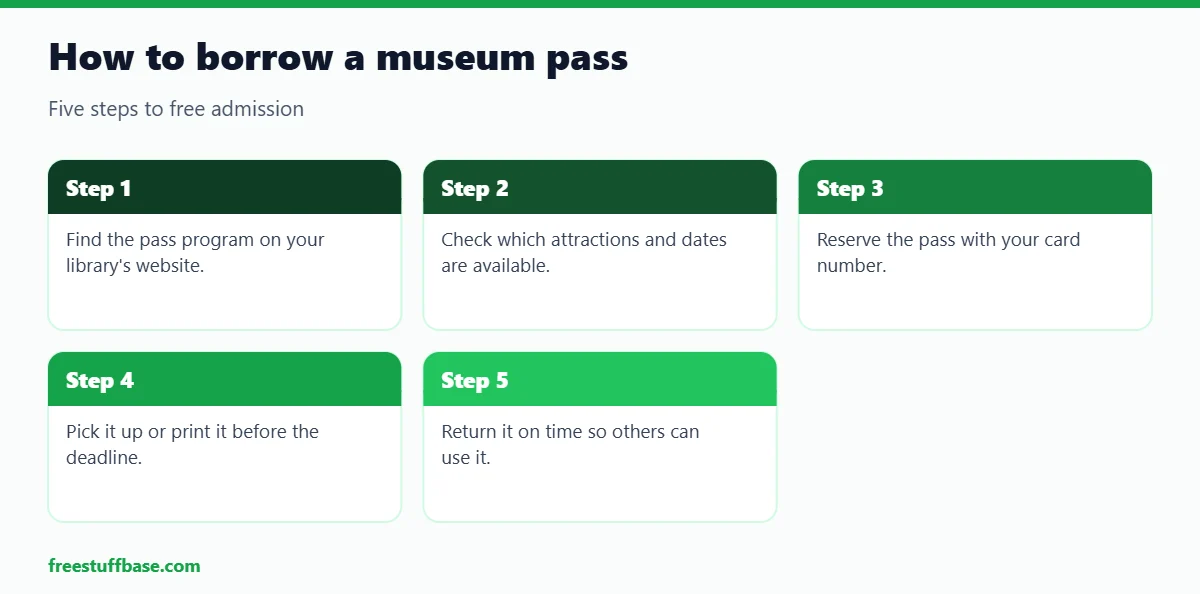
Passes are limited and go fast during school holidays, so reserve ahead:
- Find the pass program on your library’s website.
- Check which attractions and dates are available.
- Reserve the pass with your card number.
- Pick it up or print it before the deadline.
- Return it on time so others can use it.
5. A Library of Things
A Library of Things lends objects instead of books. Collections vary widely, but many include power tools, sewing machines, telescopes, board games, musical instruments, cake pans, camping gear, kitchen gadgets and outdoor games. Borrowing first is a smart way to try a hobby before you buy equipment, or to get a tool you only need once.
6. Wi-Fi hotspots, laptops and tech help
Almost every library offers free computers and Wi-Fi. Some also lend mobile hotspots and laptops to take home, which can help students and job seekers who lack internet at home. If the cost of internet is a problem, also see our guide to the Lifeline free phone program, which lowers phone or internet bills for eligible households. Many libraries run free one-on-one tech help sessions for setting up phones, email and online accounts.
7. Printing, scanning and makerspaces
Printing usually costs a small fee per page, but some libraries give free pages or free scanning and faxing. Larger libraries often have makerspaces with 3D printers, recording studios, sewing machines and design software that you can book for free.
8. Free tax help
During tax season, many libraries host free tax preparation. The IRS’s free tax return preparation page explains that its VITA and TCE programs offer free basic return preparation, including for people who generally make $69,000 or less, people with disabilities and some others, and the IRS says these sites are often located at libraries. Call your library in January to ask about dates.
9. Job search and career help
Libraries help with résumés, job applications and interview practice, and many host career workshops. Some offer free notary services. Databases for small business planning, market research and grant searches are often available free with your card.
10. Classes and events for all ages
Libraries run story times, homework help and summer reading programs for kids, plus adult classes on cooking, gardening, finance, genealogy and fitness. English language classes and citizenship study groups are common in larger systems. For more free reading for children, see our guide to free books for kids.
11. Research databases and car repair manuals
Your card often unlocks paid databases: consumer reviews, car repair manuals, genealogy records, newspaper archives and encyclopedias. These can save you a subscription or a trip to a specialist.
12. Seed libraries and community swaps
Some libraries run seed libraries where you can take free seeds for your garden and return seeds after harvest. Others host clothing, book or puzzle swaps.
How to find out what your library offers
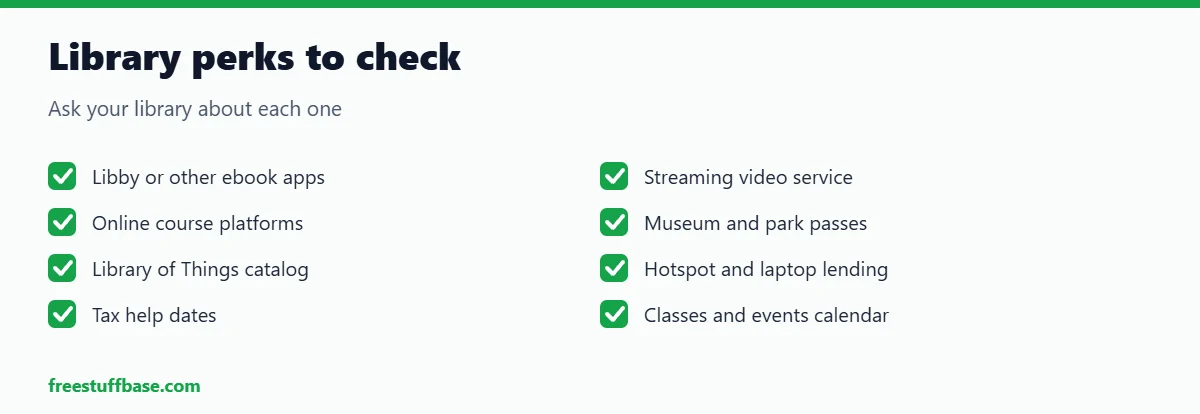
Use this list when you call or visit:
- Libby or other ebook apps
- Streaming video service
- Online course platforms
- Museum and park passes
- Library of Things catalog
- Hotspot and laptop lending
- Tax help dates
- Classes and events calendar
Start with the “services” and “digital resources” pages on your library’s website, then read the events calendar. If something is not listed, ask a librarian. Some perks, like passes and Library of Things items, are only for cardholders in good standing, so keep your card active.
Can you use more than one library?
Often, yes. Many states let residents get cards at nearby library systems, and some large city libraries offer cards to anyone who lives in the state. A second card can mean shorter waiting lists for ebooks and more passes. Check each library’s card rules before applying.
FAQ
Is a library card really free?
For local residents, almost always. Some libraries charge non-residents a yearly fee, and you may need ID and proof of address to sign up.
What are the best free things at your library besides books?
The most valuable are usually ebooks and audiobooks through Libby, free online courses, museum or park passes, and a Library of Things for tools and gear.
Do libraries still charge late fees?
Many libraries have removed late fees on most items, but you may still pay for lost or damaged items, and some charge for late Library of Things gear. Check your library’s policy.
Last checked: November 2026. What your library offers depends on its budget and location, so check its website or ask at the desk before you plan around a perk.

Md. Emam Hasan is the founder of Freestuffbase and a digital marketer and SEO specialist based in Dhaka, Bangladesh. He researches free samples, gift card policies and sweepstakes rules from official sources, and writes practical guides to help readers save money and avoid scams. More at emamit.com.